Posts

Ancient Greek Art

Image
Ancient Greek Art emerged around 8th century BCE under the Aegean civilization;a bronze age civilisation of Greek around the Aegean sea,which covered the Crete,the Cyclades and the Greek mainland.Early forms of Greek art were largely confined to ceramic pottery since the region suffered famines and forced emigrations,leading to many Greeks leave the mainland area to colonise Italy and Asia minor. Around 650 BCE,when trade links where finally re-established between the Greeks and the Egyptians and Anatolians,that the Greek culture saw a sudden rise. To understand Greek art more,we need to understand that ancient art among the Greeks evolved in three basic periods: Archaic Period (c.650-480 BCE): Under the Archaic Period,art became less stylized and had a shift towards more naturalistic impression.The period saw experimentation in it's art and culture.The walls of temples and many buildings were covered by fresco paintings with their marble or wooden structure coloured wi...

Middle Eastern Art and Architecture

Image
To understand middle eastern art or architecture, first thing is to identify what we can call middle eastern regions. Although various controversy exists about the boundaries of middle east, it mostly covers the following regions: Arabian Peninsula, Levant, Mesopotamia, Anatolia, Persian Gulf, North Africa. Middle east include region like Egypt (north Africa), Iraq (Mesopotamia), Palestine (Levant) and many other significant zones that are considered as a hub of art and architecture and had significant hold on culture and diversity over changing centuries. Middle Eastern art and architecture are significant due to their cultural preservation, religious and spiritual expression, global influence, technological advancements, artistic innovation, and their role in facilitating cross-cultural exchanges. They play a vital role in shaping our understanding of history, aesthetics, and the artistic achievements of the Middle East and beyond. For example, the built of th...

Miniature Art

Image
Miniature as the name suggests are small-scale, highly detailed paintings. They trace back to at least 9th century CE, and are living tradition with many contemporary artists still pursuing the art form. Miniature art is an intense labour of love illustrated on a range of materials like palm leaves, paper, wood, marble, ivory panels and even cloth. The common themes of these paintings are mythological and religious texts though it differs from every artist. One of the outstanding features of these paintings is the intricate brushwork which contributes to their unique identity. The colours used in these paintings are derived from various natural sources like vegetables, indigo, precious stones, silver and even gold.  Miniature paintings originated in India around 750 A.D. when Palas ruled over the eastern part of India. Since religious teachings of Buddha, accompanied by his images, were written on palm leaves, these paintings became popular. These paintings originated n...

MF Hussain, The Picasso of India

Image
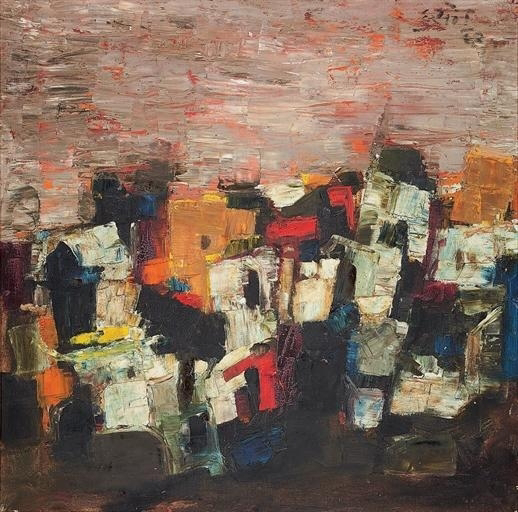
MF Hussain, The Picasso of India, is known for executing bold and vibrant coloured narrative paintings in a modified cubist style. Although he courted both fame and stirred controversy for his erotic portrayal of Hindu deities and "Bharat Mata", he was one of the most celebrated and internationally recognised artist of the 20th century. His premature association with the Bombay Progressive Artists' Group mainly focused on using modern technique which was inspired by the 'New India' after the partition of 1947. His narratives executed in a modified cubist style, can be caustic and hysterical as well as significant and sombre. His themes sometimes treated in a series included diverse topics like Gandhi, Mother Teresa, The Ramayana, The Mahabharata, The British Raj and motifs of Indian urban and rural life. His painting titled "voices" got auctioned for a record of $2.5 million in September 2020. In 1967, he received the National Film Award for Best Experim...

Breaking Stereotypes Through Art

Image
Art is not essential until its not. A simple yet very powerful emotion. An emotion that can turn wars into revolution, depressions into thoughts and the abstract into visible. All these suggest one simple thing and that is, art ,in itself has the capability to survive despite the fragility of time. And for something that has eternalised itself, it is obvious that it has been marked with criticism but emerged above the shallow boundaries of stereotypes. Going in depth of breaking the stereotypes, artists have portrayed their art as a platform to express themselves. Its always a persons’ depth that brings forwards a splash of newness over the orthodoxia of society and such part had been played by artist all over the world at different ages and times.  For example , female artists such as Frida Kahlo, Mary Cassatt, and Georgia O'Keeffe challenged gender stereotypes by creating powerful works of art that gave out the idea of women being phenomenal and not merely an subject ...

THE ISLAMIC INFLUENCE ON INDIAN ART AND ARCHITECTURE

Image
When I first visited the Taj Mahal I was a little kid. But the impeccable Jaali works and the arabesque designs on the white marble are still etched on my mind. Little did I know that the Jaali works and the arabesque designs, the geometric patterns, and the calligraphy of non-living things that seem so awe-inspiring to us, are actually an influence of a religion’s very own style of art and architecture. It has religious implications too. For example, since Islam doesn’t endorse idol worship, the designs on Islamic structures lack human or animal figurines, they are mostly dominated by calligraphy ( so popular now in design fonts, illustrations, and Instagram reels, it was actually a discovery of the Persian/Islamic world and brought to India with the Islamic rulers), Arabesque designs which are nothing but vegetal designs of continuous stems, all connected at a same point bearing flowers, and geometric designs ( geometry was an invention of the Arab world, so we can expect...

Ancient Art Mediums

Image
Ancient art mediums refer to the materials and techniques used by artists in the past to create works of art. These mediums can range from painting and sculpture to pottery and jewelry. Ancient art mediums have been used for thousands of years and have been an vital branches of many cultures. One of the most popular ancient art mediums is painting. Paintings were often used to tell stories or to depict religious or spiritual themes. People used a variety of painting techniques, including tempera, fresco, and encaustic.  Sculpture is another popular ancient art medium. Sculptures were used to represent gods, goddesses, and other important figures in ancient cultures. Some used stone and wood to create sculptures, while the others and Romans used marble and bronze. Sculptures were often used to decorate temples and other public spaces. Pottery is another ancient art medium that has been used for thousands of years. Pottery was used to create vessel...

Driving change by depicting social issues through art

Image
Artists has been bringing preferable amount of changes from the beginning by depicting powerful social issues through their artworks. Art has the power to revolutionize the world even on a small scale. It gives voice to the voiceless. Powerful art themed around social issues and pressing matters are essential tools for bringing about reform in the social and political spheres. Socially engaged art can ignite outrage and stimulate social change if steered in the right direction. It has the power to change narratives by initiating important conversations and discussions.         //Ethnicities//  Credit: Mario Tama/Getty Art and society: Art is an extension of our creative expression, thoughts, and experiences. In its various forms, art captures the collective memory of a society and reflects its ever-changing values and culture. As society develops and grows, art changes to reflect its new developments. Cultural progress and social change give mom...

How art affects and reflects the world.

Image
As Theodore Dreiser said and I quote,  “Art is the stored honey of the human soul. ” The human race is filled with passion and artistry floods through our vein in divergent forms whether be it painting, beauty, poetry, romance, love, dancing, and musical. Art instigates enthusiasm in our mundane existence. And sometimes, Art magnificently works as a method of healing; all those loud internal screaming, our unheard cries for help, the anger, the frustration, the insurmountable grief releases through art as Masterpieces that changes and inspires the world in ways that amazes humankind and affects the souls into believing in the beauty of constantly making art. It evokes emotions in us whether good or bad, changes our perspective towards the society, and everytime we contemplate the beauty of it's own, we lose ourselves in the ocean of curiosity, trying to put a picture to the artist's state of mind while making the art.  Art makes the world seen and felt....

Essentials of understanding art

Image
The expression or application of human creative skill and imagination, typically in a visual form such as painting or sculpture producing works to be appreciated primarily for their beauty or emotional powers is the general definition of art. There stands a multitude of different genres and types of art which emerges from the minds of the maker. There are many forms of art whose basic philosophy and primary focus would be to give the audience or observer a basic visual stimulation or visual pleasure. However, many art forms exist which offer a broader spectrum of interpretation to them. Many of such art are symbolic in nature and require a deeper understanding of things for their specific interpretation. Art may also be directed towards a specific audience, just like the eye of providence or the symbolic illustration of Baphomet; both of whose exact philosophy are still being debated in today’s current world as both of those were directed towards the secret society and the ...

Origin of digital art

Image
Traditional paintings can never be dated on a timeline accurately, the origin can be extremely debatable. The first made cave paintings that we have been able to find and date is of a life-sized picture of a wild pig that was painted at least 45 and a half thousand years ago in Indonesia. The oldest painting on canvas was made between the mid 14th century and the early 15th century though the dating is highly controversial.  In the pre Renaissance period the paintings were made on solid medias like wooden panels. The process of painting on physically media that could be touched and felt was the only known and possible way for hundreds of years.  But the things were about to change with the introduction of digital art. The term was first used in the early 1980s when engineers created a program what could paint. Later Harold Cohen became the pioneer of a group of artists who focuses primarily on non physical media to paint on, a.k.a Digital artists. Almost 70 years p...

Art, through the lens of AI...

Image
“He has made everything beautiful in its time”- Ecclesiastes3:11.  The origin of every existing artistic creations hides beneath the monolith of age old human desire to connect themselves with that grand design. Thus the quest begins and thus word “Art” comes to play. Now throughout this epic quest, “artists” invented many “tools” and “techniques” to colour up their thoughts. From the cave art of Lascaux to the renaissance art, they created numerous methods to make their “art” more realistic, more vibrant. They observed the world , the views, the scenarios, the events which to them was “real” and tried to replicate that “realism” through their works, through their own reflections. As the river flows, some of those seekers succeed to create their personal variation of the real world, they understood that words like truth and real can be deceiving and unique simultaneously. Thus all those variations of “traditional art” continue to contribute concentrically to this great quest. Till ...

The Portuguese Blues

Image
 If you walk down the picturesque, colourful lane of Fontainhas in Goa, you will come across colours of the colonial past, in structures, architecture and hues. But most importantly, you will come across painted tiles , mostly blue and white, being used as nameplates, to depict the scenes of Goa, in galleries and normal houses alike. These tiles, known as the Azulejos tiles, are the impactful artistic gifts that the Portuguese introduced to this country and its people. While the presence of this art form had vanished from India with the departure of the Portuguese from Goa, it was recently brought back and rejuvenated by artists and these tiles are painted and prepared in bulk all around Goa at present. This art form has been deeply ingrained in the cultural folding of Goa and reflects its past and present alike. The origin of the word Azulejo traces its root back to three languages: Spanish, Portuguese and Arabian. There are several accounts of history depicting the birth of this ...

Importance of Social media in Art Business

Image
At present, artists are continually looking for ways to expand the reach of their arts in the best possible ways. One of the most important source to enable artists expand their artworks in social media.  Here are some specific strategies to be followed:-  1. Marketing your artwork: social media enables artists at all levels and skills to market themselves free of charge. As an artist, you will often find yourself looking for every possible opportunity to advance your career and improve your work. Social media provides a free, fairly simple way to do this.  2. Developing target audiences: Regardless of your artworks, you want people who are enthusiastic to present it forward. If you are putting paintings of cityscapes in front of nature lovers, your sales probably won't increase but finding target audience would develop greater impact.  3. Find peers and inspiration: While utilising social media, you can meet and interact with people around the world. Fir...